
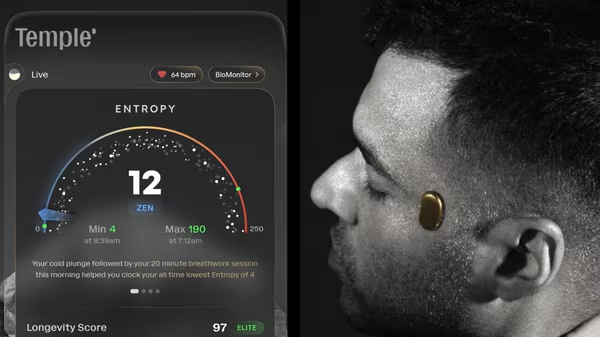
Temple Entropy has sparked a debate in the health-tech industry over whether a new biomarker can provide deeper insights into human health.
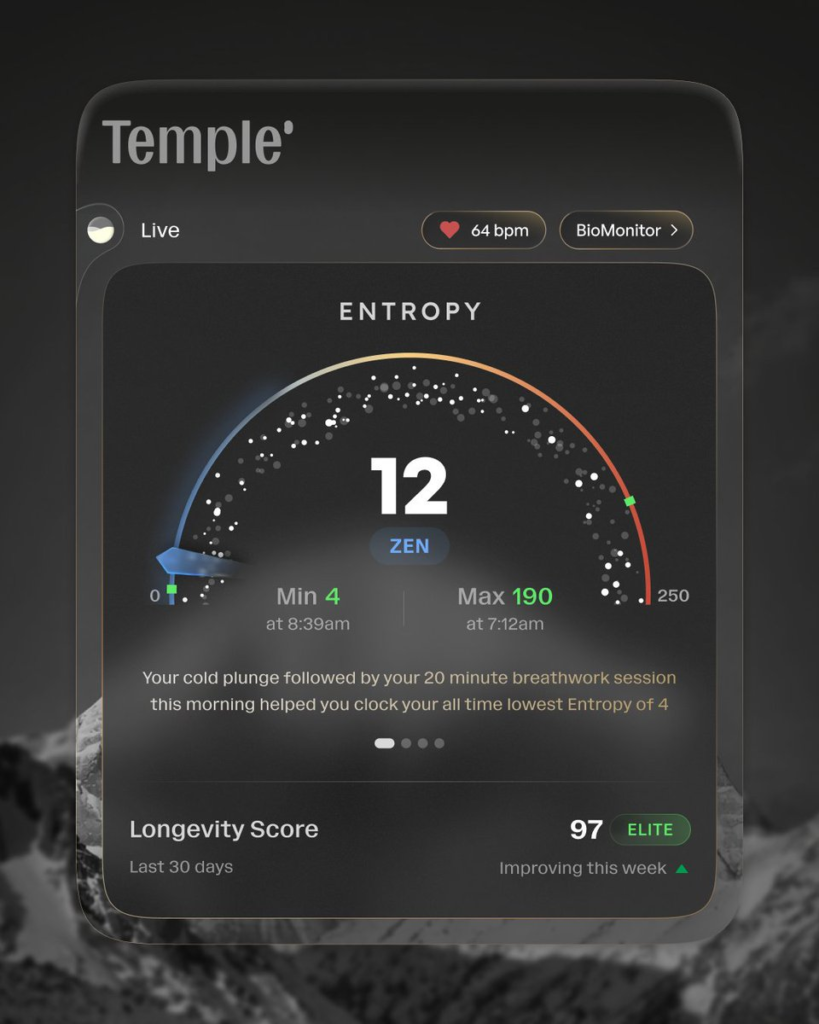
Deepinder Goyal’s startup Temple believes the answer may lie in a new biomarker called “Entropy”. The company recently unveiled the metric, describing it as a way to measure the real time metabolic cost of the human body. According to Temple, Entropy can provide deeper insight into how hard the body’s systems are working, potentially offering a broader view of health than many traditional indicators.

The announcement has generated instant buzz across both the health-tech and scientific communities. Temple contends that even though people today have access to an overwhelming amount of health data, most metrics provide fragmented information. Entropy, however, aims to capture the body’s overall metabolic effort in a single measure.
If successful, a metric capable of summarizing physiological strain could have implications for preventive healthcare, recovery monitoring, fitness optimization, and long-term wellness tracking. As the wearable technology market surges and consumers are becoming increasingly health conscious, the appetite for deeper health insights has never been stronger.
Yet, the hype around Entropy has also been met with heavy skepticism. Several researchers and healthcare professionals have questioned whether Entropy should be considered a truly new biomarker and whether sufficient scientific evidence has been made publicly available to support the claims made around it. Others have emphasized that introducing a health metric of this nature requires extensive peer-reviewed validation, transparent methodology, and thorough, independent clinical trials before the medical community will widely accept it.
The debate highlights an obstacle faced by many health-tech startups. Innovation happens quickly, but proving the science takes time. New ideas spark buzz, but long term credibility depends on evidence and results.
What makes the discussion around Entropy compelling is that the criticism is not exclusively pointed at the concept itself. Rather, a great deal of conversation revolves around whether the science currently available is enough to justify the claims being made. In essence, the question is less about whether Entropy is an interesting idea and more about whether it can meet scientific standards.
Ultimately, Temple’s success will likely depend on its ability to provide that evidence. Regardless of where the debate eventually leads, the company has already succeeded in attracting attention to a larger issue, people no longer want more health data; they want better ways to understand what that data actually means.