For years, success in India’s startup ecosystem had one clear benchmark, becoming a unicorn. Billion dollar valuations made headlines, and every new funding round became a measure of progress.
Today, that ambition is quietly changing.
Instead of asking “Who’s raising the next funding round?”, investors are increasingly asking “Who’s next in line for an IPO?”
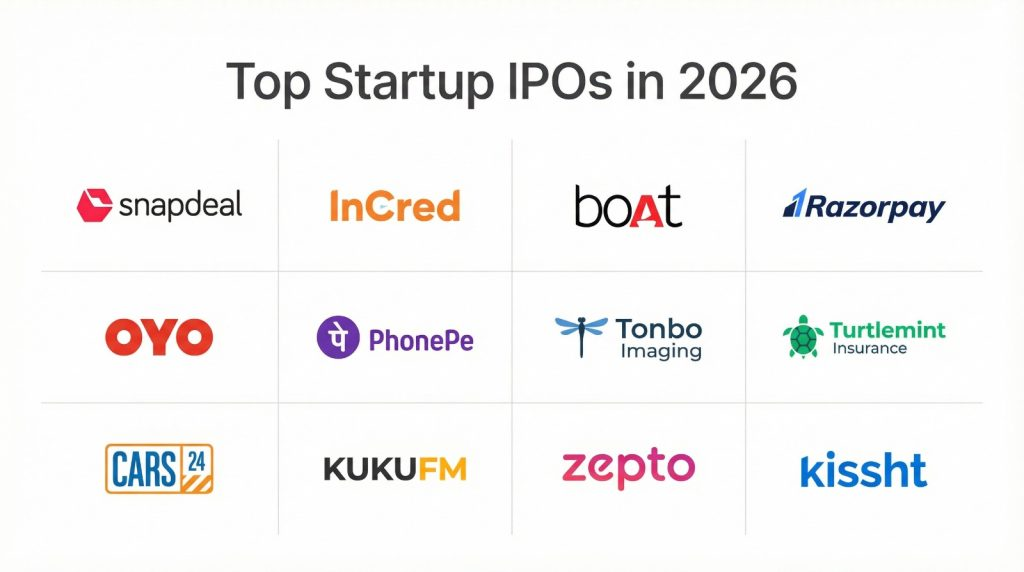
Swiggy, FirstCry and Ola Electric have already joined the stock market. Meesho has listed, while companies such as Cult.fit, Zepto, boAt and others are lining up for their turn. While each company has its own strategy, together they signal that India’s startup ecosystem is entering in a new phase of maturity.
For more than a decade, venture capital held a monopoly on how startups grew. Founders focused on acquiring users, expanding rapidly and raising larger funding rounds to fuel that growth. The stock market demands something very different. Investors look beyond optimistic forecasts and demand steady revenue, rising profits, transparent leadership and sustainable business models. That change is beginning to influence startup strategy long before companies file their IPO papers.
Instead of prioritizing growth at any cost, many late-stage startups are working to improve margins, reduce cash burn and strengthen financial discipline. Success is no longer defined by how valuable a company looks on paper. Instead, the focus has turned to building real businesses, ones capable of meeting the high expectations of public shareholders, quarter after quarter.
The timing isn’t accidental.
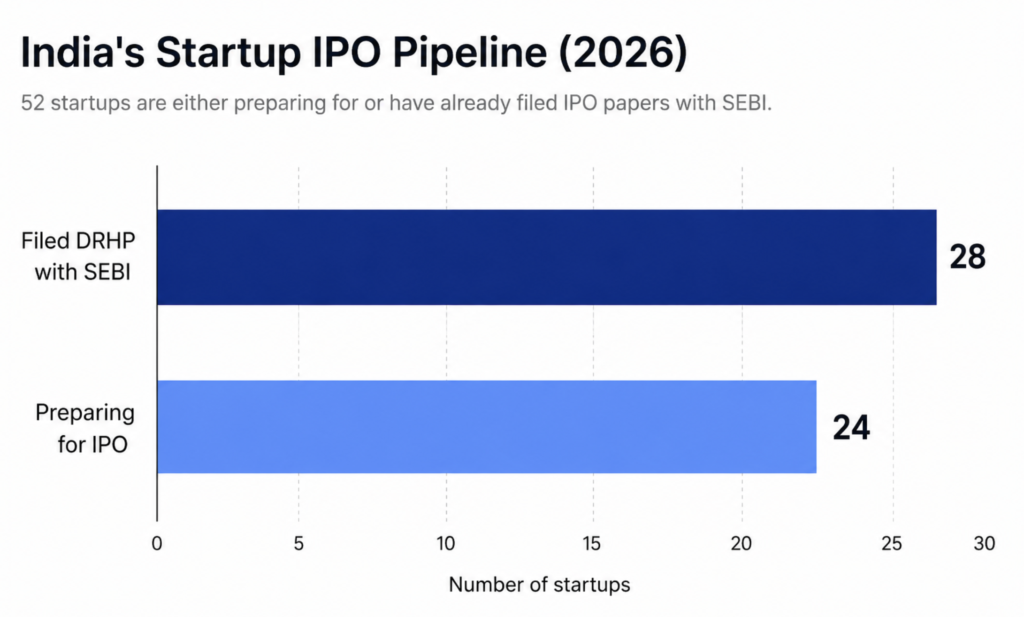
India’s public markets have become increasingly receptive to new age technology companies, while several venture backed startups have reached a stage where early investors are seeking exits and founders are looking for more permanent sources of capital. Simultaneously, the volume of companies filing to go public has reached historic heights. According to recent industry tracking, 28 startups have already filed draft papers with SEBI, while another 24 are in different stages of preparing their public listings, making 2026 one of the busiest years yet for startup IPOs.
Yet the rush to go public is also rewriting the traditional benchmarks of entrepreneurial success.
A billion-dollar valuation once dominated headlines because it reflected investor confidence. An IPO demands something more difficult. It requires companies to earn that confidence repeatedly in front of public markets, where financial performance is scrutinized every quarter.
That’s why the growing list of IPO bound startups matters.
It’s not simply a wave of companies looking to raise capital. It reflects an ecosystem that is gradually moving beyond the race for private funding. The next chapter of India’s startup story may no longer be defined by how quickly companies become unicorns, but by how successfully they transition into durable public businesses.