
There was a time when India’s largest online education companies competed to build the biggest library of recorded lectures. More videos meant more subscribers. More teachers meant a stronger brand. Success was measured by the size of a course library, not by what students actually learned after clicking “play.”
This approach is gradually losing its relevance.
Not because students have stopped watching online classes, but because educational content itself is becoming abundant. A concept that once required a paid course can now be explained through YouTube, ChatGPT, Gemini or countless free learning platforms within seconds. For the first time, content alone is no longer the product.
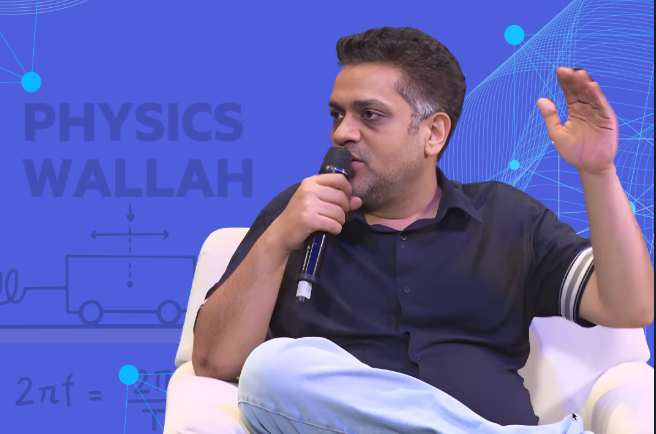
The clearest sign of this shift came from PhysicsWallah itself. Speaking about the future of edtech, co-founder Prateek Maheshwari recently declared that “recorded learning is already dead,” arguing that the industry’s biggest opportunity now lies in conversational AI tutors that sit alongside live teaching rather than replacing it. Today, the company says artificial intelligence already resolves more than 90% of student doubts, evaluates billions of answer sheets and powers products such as AI Guru, Ask AI and AI Books.
PhysicsWallah is just one example of a much larger industry trend.
Mumbai-based Klassroom, which recently filed for an SME IPO, plans to use part of its IPO proceeds to strengthen its AI technology stack, launch multilingual AI tutors and establish dedicated AI innovation hubs. The company believes AI-led programmes will become one of its fastest-growing businesses.
For years, every learner received the same explanation regardless of where they struggled. If someone misunderstood a concept at midnight, the only option was replaying the same lecture again. AI is beginning to change that by identifying weak areas, generating personalised practice questions, answering doubts instantly and adapting explanations instead of repeating them.
The economics behind that opportunity are enormous. India’s online education market is set for major growth over the next ten years, driven by affordable internet, smartphones and increasing demand for digital learning. Industry analysts also identify AI-driven personalisation as one of the biggest growth drivers for the sector.
The shift is extending beyond private companies. Punjab has announced plans to establish AI-driven digital universities, while OpenAI has partnered with Indian higher-education institutions and edtech companies to integrate AI into learning and workforce training. Other states like Tamil Nadu, Andhra Pradesh and Karnataka have also joined in this transformation.
The first generation of EdTech companies made education accessible from anywhere. The next generation is trying to make education different for everyone. That is a much harder problem to solve. And it may also become the industry’s biggest competitive advantage.