
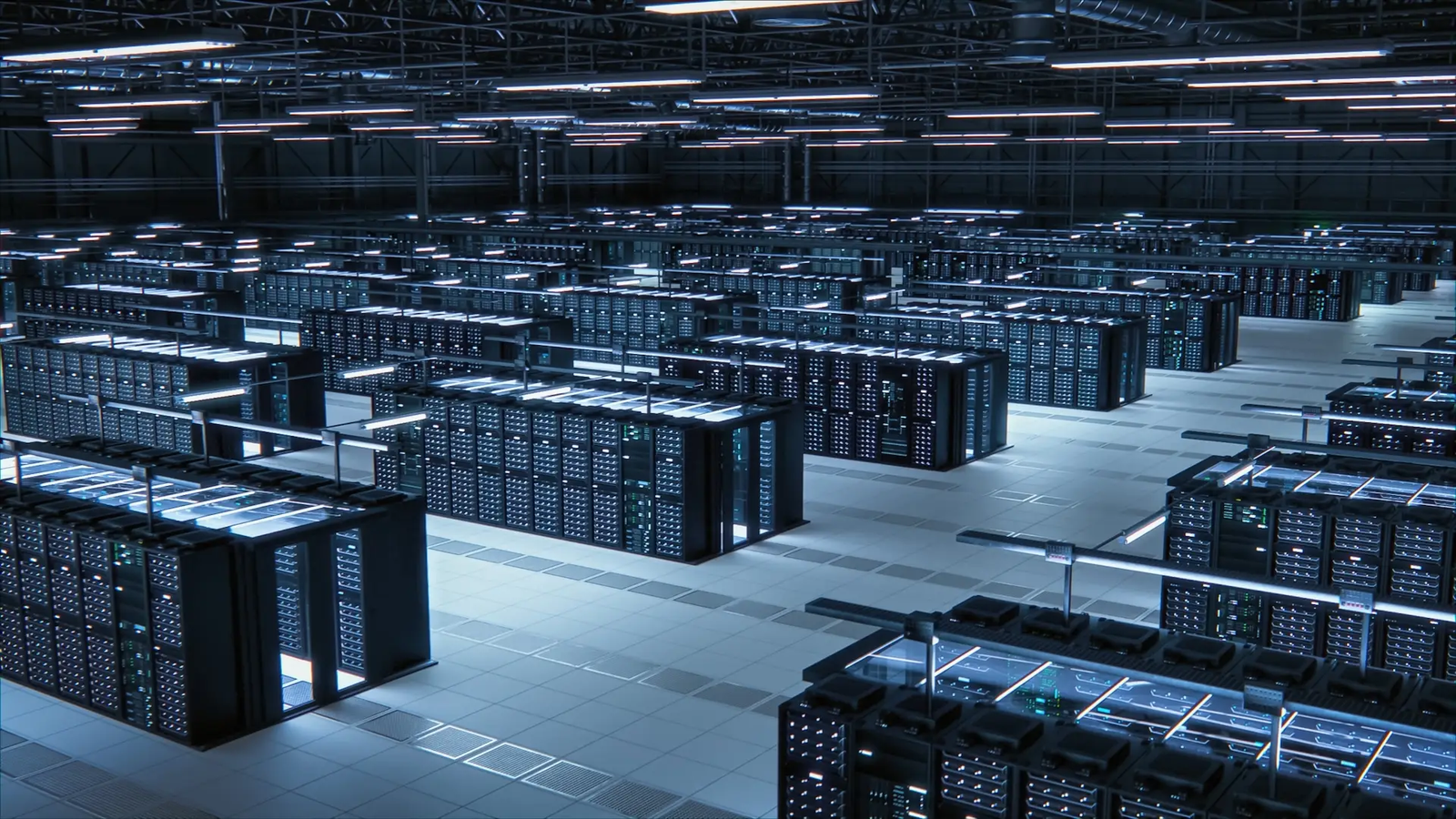
A new kind of Company is beginning to appear across India and it isn’t making cars, phones or pharmaceuticals. It is making computing power.
On August 13, Larsen & Toubro (L&T) announced a ₹10,000–15,000 crore order to build an AI Factory for US-based AI cloud company Together AI at its Chennai data-centre campus. The facility is planned to house 10,000 NVIDIA B300 GPUs, which will be used to train, fine-tune and run AI models at scale.
Then, less than two weeks later, another large bet arrived.
AM Intelligence, an AI infrastructure company backed by the promoters of Greenko, announced an order for around 9,000 NVIDIA Vera Rubin GPUs for its first AI Factory in Hyderabad. The first phase will provide 30 MW of capacity, with the company planning a much larger 1 GW compute-as-a-service network and more than $8 billion in capital expenditure.
Put together, that is almost 19,000 advanced AI GPUs tied to two Indian facilities announced within days of each other. And it points to something that is easy to miss when most conversations about AI revolve around chatbots and models.
AI needs a physical home.
Every time an AI model answers a question, generates an image or analyses a document, enormous amounts of computing happen somewhere behind the screen. That requires specialised chips, data centres, high-speed networks, cooling systems and large amounts of electricity.
India is now investing heavily in that underlying layer.
The government is building it too. The IndiaAI Mission had expanded its shared computing capacity to more than 45,000 GPUs by June 2026. By August, 237 projects had accessed subsidised AI computing, accounting for 93.18 lakh GPU hours. The aim is to make high-performance computing more accessible to Indian startups, researchers and developers who might otherwise struggle to afford it.
The country is simultaneously developing its own AI models. Out of 506 applications, the government has selected 20 indigenous foundation-model proposals, including large multimodal models and smaller language models designed around Indian languages and local requirements.
That makes the current infrastructure push more interesting.
India isn’t only trying to answer the question, “Can we build our own AI model?” It is also answering a less glamorous but equally important one: “Do we have enough computing power to build and run whatever comes next?”
For startups, that distinction matters. A promising AI company needs access to compute before it can train a model, test an application or serve thousands of users. More domestic capacity could make that access faster and, potentially, more affordable.
The Chennai and Hyderabad projects are still being built, so their eventual impact remains to be seen. But the direction is becoming difficult to ignore.
The AI boom is creating a new infrastructure industry around itself and India is positioning itself to build a significant part of it.