
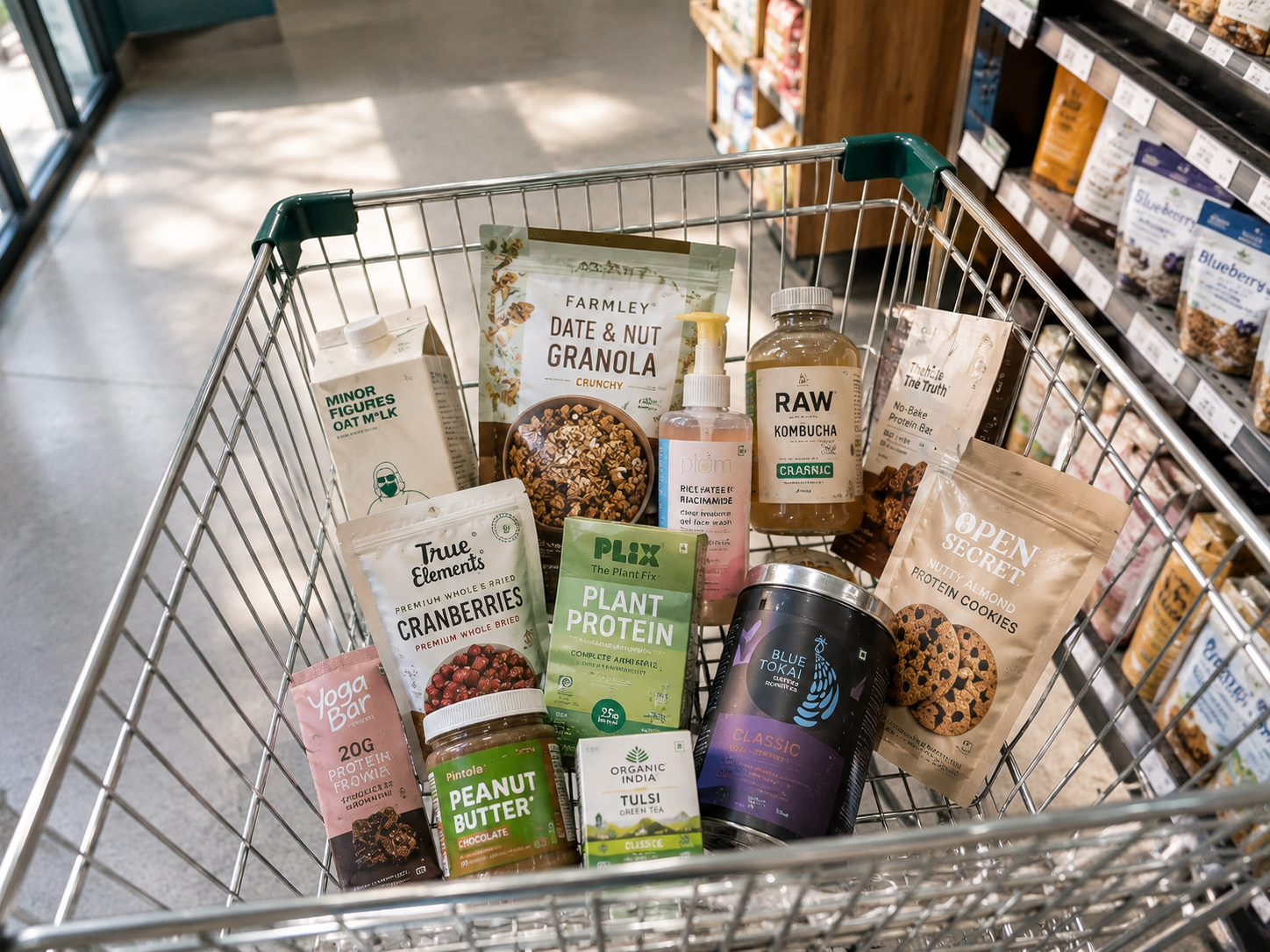
Walk into a supermarket today and you’ll notice something unusual. The shelves aren’t getting fuller. They’re getting more specific. Protein cookies instead of regular biscuits. Ingredient-first skincare instead of “beauty products.” Single-origin coffee instead of just coffee.
What looks like a simple change in shopping habits is quietly reshaping India’s D2C startup ecosystem.
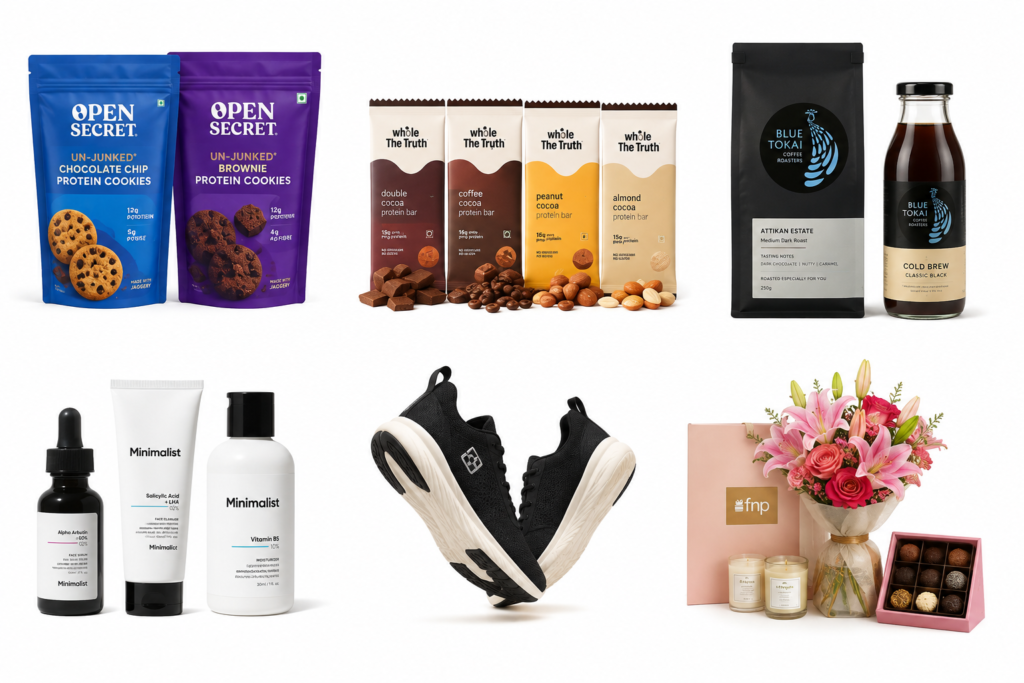
Over the past few weeks, India’s D2C startup ecosystem has delivered a series of seemingly unrelated headlines. Healthy snacking brand Open Secret raised ₹50 crore to expand its business. Footwear startup BUILT secured $2 million to strengthen its premium sneaker brand. At the same time, companies like Ferns N Petals announced ambitious expansion and IPO plans, while large FMCG players continued doubling down on digital-first brands through acquisitions.
The products are different. The strategy isn’t.
One of the biggest changes inside India’s D2C startup ecosystem is that founders are no longer trying to build brands for everyone. Increasingly, they’re building brands for very specific consumers with very specific needs.
Look closely at some of India’s fastest-growing consumer startups. Minimalist built its identity around ingredient-first skincare. The Whole Truth focused on clean-label nutrition. Blue Tokai turned specialty coffee into a mainstream conversation. Open Secret chose healthier alternatives to everyday snacks instead of competing with every biscuit on supermarket shelves. None of these companies succeeded by creating entirely new products. They succeeded by rethinking who those products were really for.
That shift is changing the way investors evaluate consumer startups as well.
A decade ago, the ambition was often to build the next mass market consumer brand as quickly as possible. Today, a startup with a clearly defined audience, strong repeat purchases and a distinctive brand identity can be just as attractive as one chasing millions of customers. Founders and investors increasingly talk about differentiation, customer loyalty and retention rather than simply reaching the widest possible audience.
Ironically, becoming more specialised is allowing many of these companies to become much larger.
Consumers no longer expect one brand to solve every problem. They are increasingly comfortable buying skincare from one company, protein snacks from another, specialty coffee from a third and performance footwear from a fourth. India’s expanding middle class, rising disposable incomes and digital commerce have made these focused businesses commercially viable in ways they weren’t a decade ago.
Perhaps that’s the biggest sign that India’s D2C startup ecosystem has matured.
The next generation of consumer startups may not be remembered for building brands that appealed to everyone. They may be remembered for understanding a much smaller group of customers better than anyone else.