
If you are a strong engineer or technical thinker dreaming of working on frontier AI, this could be a rare opportunity. OpenAI has officially opened applications for its OpenAI Residency 2026 program.
The residency is designed for people who may not have a formal background in machine learning or AI but have strong technical fundamentals, curiosity, and the ability to learn fast.
—
What Is the OpenAI Residency Program?
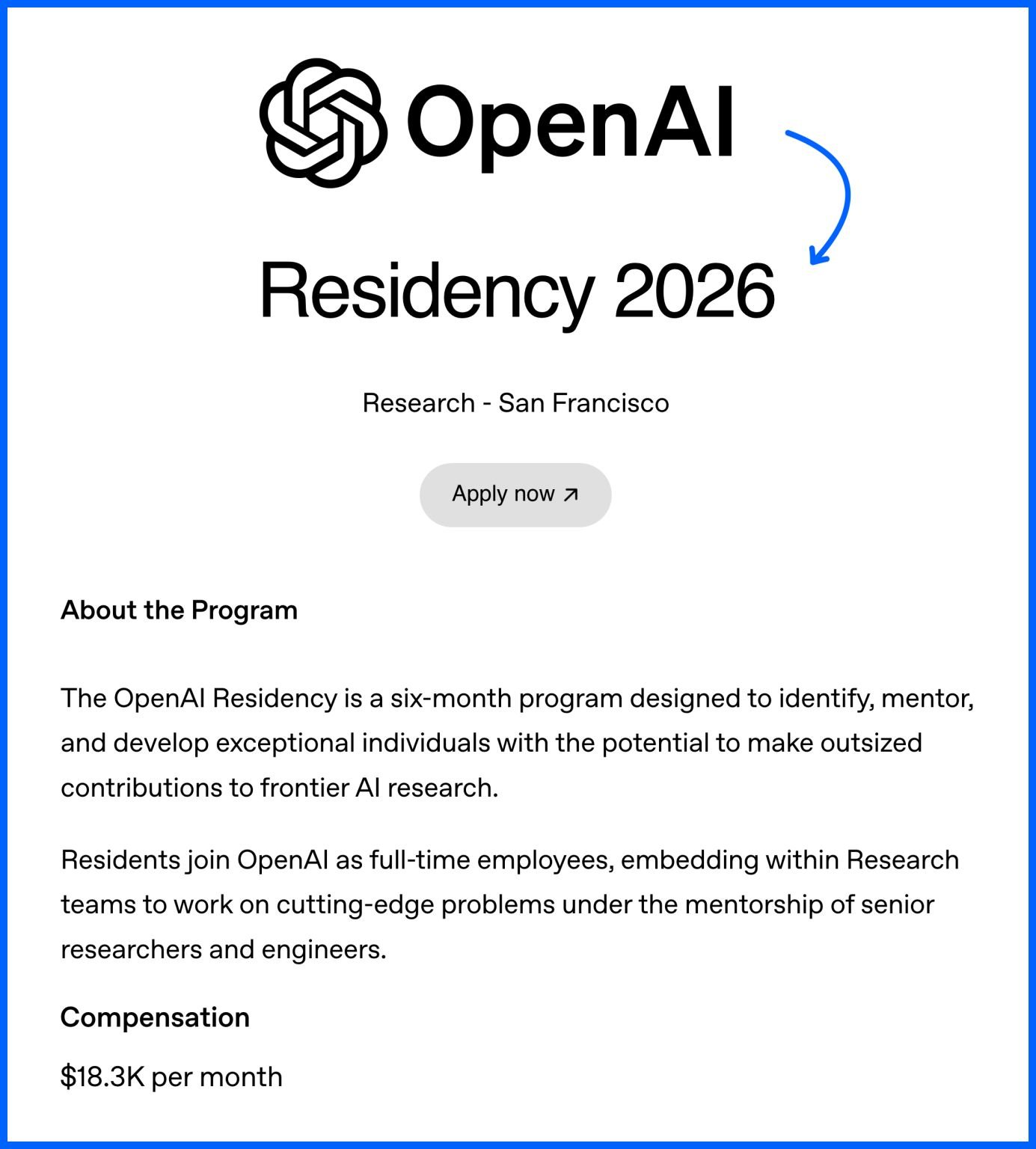
The OpenAI Residency is a 6-month, full-time, paid research program based in San Francisco. Residents work closely with some of the world’s top AI researchers and engineers on cutting-edge artificial intelligence systems.
This program acts as a bridge for talented engineers, scientists, and programmers who want to transition into AI research.
—
Key Highlights
🧠 6-month full-time residency in San Francisco
💰 ~$220,000 annualized compensation
Around $18,300 per month
✈️ Relocation support included
🚀 No prior ML or AI experience required
🤝 Work directly on frontier AI research
📅 Interviews begin in January 2026
What matters most is your problem-solving ability, coding skills, and learning mindset—not your previous AI background.
—
Who Should Apply?
This program is ideal for:
Software engineers
Competitive programmers
Researchers from math, physics, or systems backgrounds
Developers curious about AI but lacking formal ML experience
If you’ve ever thought “I want to work in AI, but I don’t know where to start”—this program is built exactly for that.
—
Why This Opportunity Matters
Breaking into AI research is usually difficult, especially without prior experience. The OpenAI Residency removes that barrier by offering:
Hands-on mentorship
Real research exposure
A chance to contribute to globally impactful AI systems
For many past residents, this program became a launchpad into long-term AI research careers.
—
How to Apply
🔗 Apply here:
https://openai.com/careers/residency-2026-san-francisco/
OpenAI Residency 2026 Applications Are Now Open