India’s consumer market has seen a major shift over the last few years. Consumers are no longer buying only from traditional brands and large retailers. A new generation of Direct-to-Consumer (D2C) startups has built strong brands by selling directly through websites, apps, marketplaces, social media and quick-commerce platforms.
From beauty and fashion to electronics, food, furniture and healthcare, Indian D2C startups are entering almost every consumer category.
India’s D2C ecosystem has also entered a more mature phase. A 2026 report cited by Indian Retailer says D2C companies raised around $6 billion across nearly 2,000 equity funding rounds between January 2021 and August 2026.
What Is a D2C Startup?
D2C stands for Direct-to-Consumer.
Instead of depending entirely on traditional distributors and retailers, D2C companies build a direct relationship with customers through digital channels.
A typical D2C brand may sell through:
- Its own website
- Mobile apps
- Amazon and other marketplaces
- Instagram and social media
- Quick-commerce platforms
- Offline stores
- Modern retail
The Indian model has increasingly become omnichannel, rather than being limited to selling only through a brand’s own website.
Major D2C Startup Players in India
There are hundreds of D2C brands operating across India. Some have become particularly well-known because of their brand building, product innovation and ability to scale.
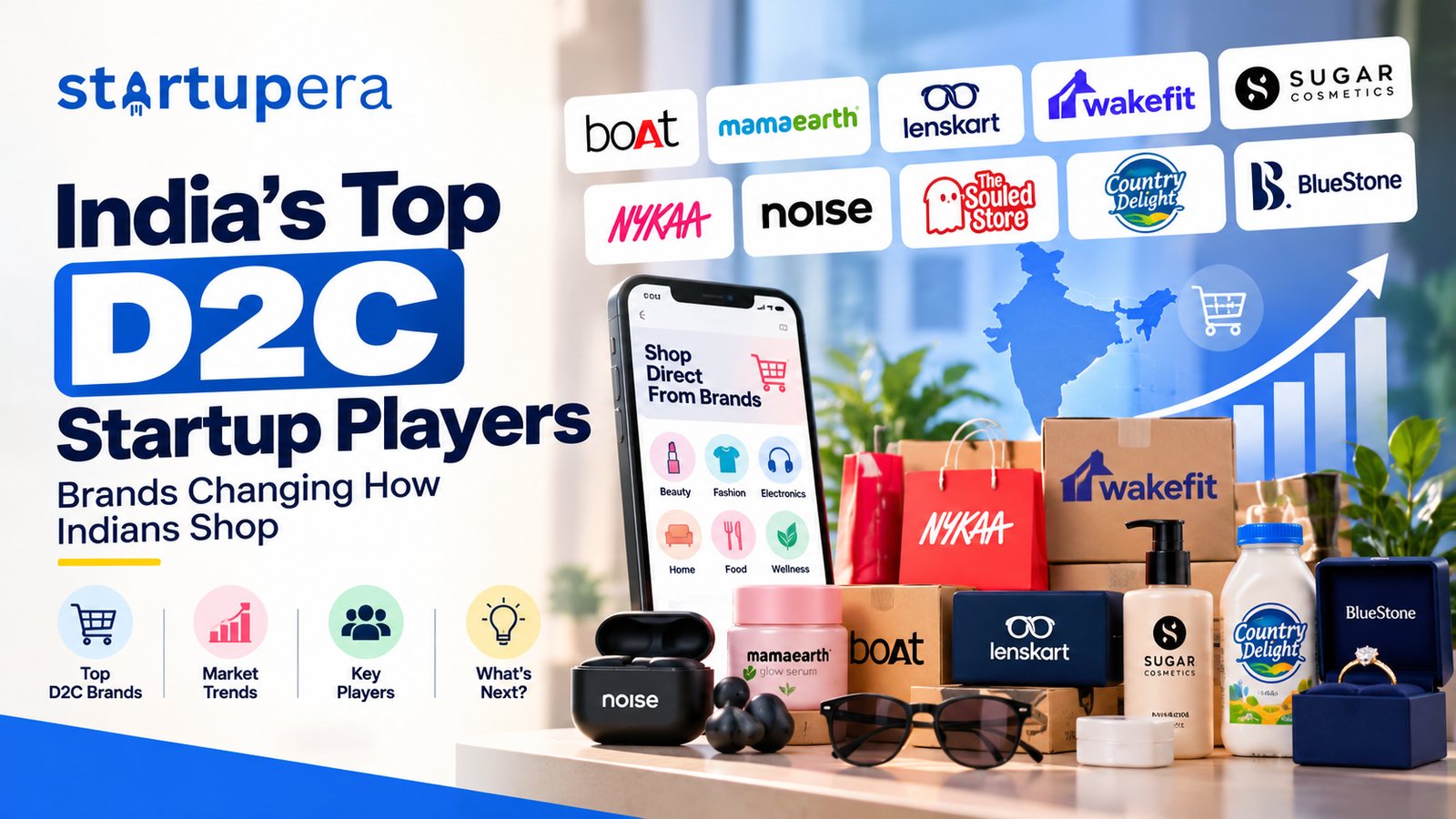
1. boAt
boAt has become one of India’s most recognisable consumer electronics brands.
The company built its presence around affordable and stylish products such as earphones, headphones, smartwatches and speakers.
Its strong digital marketing, influencer campaigns and youth-focused branding helped it build a large consumer base.
2. Mamaearth
Mamaearth built its brand around personal care and beauty products, initially focusing on products positioned as toxin-free and suitable for families.
The company became an important example of how digital marketing, social media and influencer-led brand building can help a new consumer brand compete with established players.
3. Lenskart
Lenskart transformed the eyewear-buying experience by combining digital commerce with physical stores.
The company offers spectacles, sunglasses and contact lenses while using technology to support product discovery and purchasing.
Its journey also demonstrates how a D2C-origin business can develop into a large omnichannel consumer company.
4. Wakefit
Wakefit operates in the sleep and home-furnishing category, selling products such as mattresses, beds, sofas and other furniture.
The brand built strong online visibility before expanding its physical retail presence.
Its growth shows how D2C companies can use digital channels to enter categories traditionally dominated by offline retailers.
5. SUGAR Cosmetics
SUGAR Cosmetics focuses on beauty and makeup products, particularly products designed for Indian consumers.
The company has used social media, content marketing, influencers and a strong brand identity to connect with younger customers.
SUGAR is also part of the broader wave of women-led consumer businesses emerging from India’s startup ecosystem.
6. Nykaa
Nykaa began as a digital-first beauty and cosmetics retailer and developed into a major beauty and lifestyle platform.
It demonstrates how a digital consumer business can build a strong brand and subsequently expand into physical retail and multiple product categories.
7. Noise
Noise is another prominent Indian consumer electronics brand, particularly known for smartwatches and wearable technology.
Its focus on accessible pricing, product launches and digital-first marketing has helped it compete in India’s rapidly growing wearable market.
8. The Souled Store
The Souled Store built a strong consumer brand around pop culture, entertainment and merchandise.
Its products include clothing and lifestyle merchandise connected with popular movies, shows, characters and other cultural properties.
The company represents the growth of niche D2C brands built around communities and consumer interests.
9. Country Delight
Country Delight operates in the dairy and grocery segment, using technology and a direct delivery model to connect consumers with everyday food products.
Its business demonstrates that the D2C model is not limited to fashion, beauty or electronics.
10. BlueStone
BlueStone is a major digital-first jewellery brand that has combined online discovery with physical stores.
Jewellery is a category where trust and physical experience are particularly important, making its omnichannel approach an important part of its business model.
These names are among the brands frequently highlighted in recent D2C industry coverage, alongside players such as Plum, Minimalist, Licious, The Whole Truth, Atomberg and others.
The D2C Market Is Becoming More Competitive
The early D2C playbook was relatively simple:
Create a product → Run digital ads → Acquire customers → Scale online.
That model is becoming harder.
Customer acquisition costs have increased, competition has grown, and consumers have more choices.
Today, successful D2C businesses need to think about:
- Product quality
- Brand building
- Customer retention
- Supply-chain efficiency
- Quick commerce
- Offline retail
- Community building
- Influencer marketing
- Profitability
- Repeat purchases
Recent industry coverage also shows D2C brands increasingly focusing on supply-chain efficiency and managing input and logistics costs.
Quick Commerce Is Changing D2C
Quick-commerce platforms such as Blinkit, Zepto and Swiggy Instamart are becoming important distribution channels for consumer brands.
For many emerging brands, these platforms can provide access to customers much faster than building a large offline distribution network.
At the same time, dependence on digital platforms creates a new challenge: brands need to build their own customer loyalty rather than relying entirely on marketplaces and paid visibility.
What Will Drive the Next Wave of D2C Startups?
The next generation of Indian D2C startups is likely to focus on specialised categories and stronger customer communities.
Some important areas include:
Beauty & Personal Care
Science-backed skincare, cosmetics and wellness products.
Food & Nutrition
Healthy snacks, functional foods, premium grocery and beverages.
Fashion & Lifestyle
Niche fashion brands targeting specific communities and consumer segments.
Home & Living
Furniture, home décor, appliances and lifestyle products.
Health & Wellness
Consumer-focused healthcare, fitness and wellness products.
Technology Products
Wearables, smart home products and affordable consumer electronics.
Final Thoughts
India’s D2C story is moving beyond simply selling products online.
The brands that survive and scale will need to build strong products, memorable brands, efficient operations and long-term customer relationships.
Companies such as boAt, Mamaearth, Lenskart, Wakefit, SUGAR Cosmetics, Nykaa, Noise, The Souled Store, Country Delight and BlueStone demonstrate the variety of opportunities available in India’s consumer market.
For entrepreneurs, the D2C opportunity is still significant — but the focus is shifting from growth at any cost to sustainable, profitable and brand-led growth.
India’s next big consumer brands may already be being built today.